
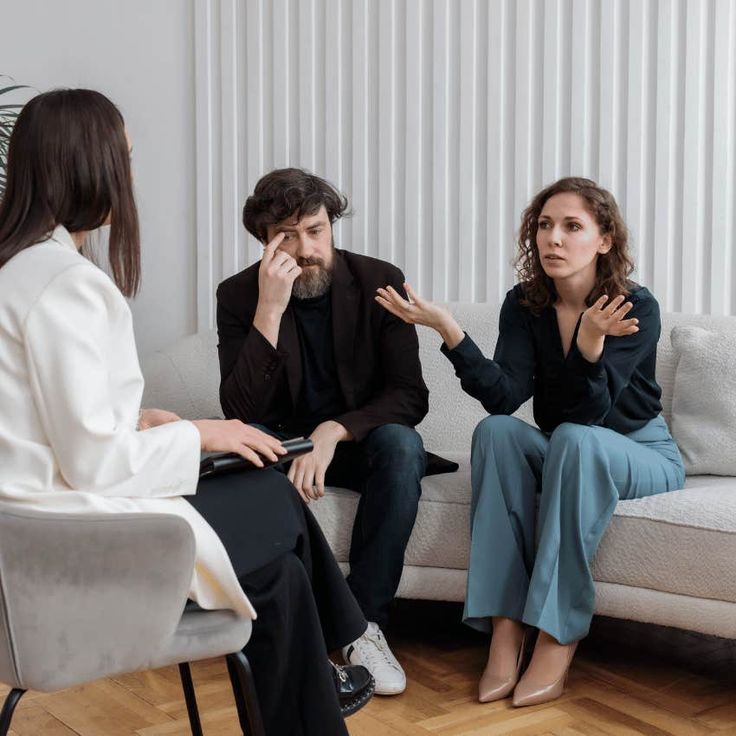
Your Husband Agreed to Couples Counseling. Now You’re Not Sure What to Do With That.
You asked. He said yes. And now you’re sitting with this strange mix of relief and dread, wondering what you just set in motion.
That reaction makes complete sense. You’ve been carrying the weight of “we need help” for a long time, probably longer than you’ve said out loud. And now that the door is open, it feels terrifying in a way you didn’t quite expect. What if it makes things worse? What if he shuts down in the room? What if you finally have to say the things you’ve been avoiding?
These aren’t signs that you made a mistake. They’re signs that you care about your marriage and that you know something real is at stake.
If you’re in the Jenison or West Michigan area and you’ve reached this moment, we want to help you through what comes next.
The Fear Under the Relief
Here’s what we see often: the person who pushed for counseling is the one who panics once it’s scheduled.
That tracks. You’ve been the one holding the awareness of how bad things have gotten. You’ve been the one researching therapists at 11pm, the one rehearsing how to bring it up, and the one managing the emotional math of your household. Now that your husband said yes, the abstract idea of “getting help” has turned into an actual appointment with an actual person. And suddenly it’s very real.
A few fears we hear from people in exactly your position:
“What if he only agreed to get me off his back?” This one is worth naming, because it’s common. Some partners say yes as a way to buy peace, not because they believe anything will change. In our experience, something shifts for a lot of skeptical husbands once they’re actually in the room. The format changes what’s possible. A neutral space with a skilled therapist gives many reluctant men permission to say things they couldn’t say at home.
“What if it turns into a blame session?” Couples counseling at Great Lakes Wellness Counseling is about helping both of you understand what’s been happening between you and building something better than what you have right now.
“What if it doesn’t work?” We’ll be honest with you: counseling is not a guarantee. But doing nothing has a track record too. If you’ve already asked yourself whether couples counseling can really help your relationship, you already know you’re past the point of hoping things improve on their own.
What’s Actually Going to Happen in That First Session
The first session usually turns out to be the easiest one.
When a couple comes in for the first time, we’re not going to ask you to relive every argument or air every grievance in the first hour. That’s not a useful start. What we’re actually doing in that first session is getting to know you both, separately and together. What brought you here? What you’re each hoping for. What your relationship actually looks like from the inside.
Your husband doesn’t have to have it all figured out. He doesn’t need to come in with a prepared speech about his feelings. A lot of men who describe themselves as “not good at this stuff” surprise themselves by the end of the first session, because the therapist is steering the conversation in a way that makes space for people who aren’t naturally comfortable talking about their marriage.
You don’t have to perform either. You don’t have to show up as the emotionally articulate one who has all the words. You can be confused, or sad, or honestly not sure what you want from counseling other than for things to feel different. That’s enough to start.
One thing that helps: both of you going in with one honest answer to the question, “What do I want this to look like six months from now?” Not a strategy, not a list of demands. Just a picture of what better could feel like. Hold onto that.
The Part Nobody Talks About: Your Role Is Going to Shift
You’ve been managing this. Probably for a while.
You’ve been the one tracking the distance between you, the one noticing when things get better or worse, the one researching warning signs that it’s time to try couples counseling, and the one reading articles like this one. You’ve had to be the driver.
When you start working with a couples therapist, some of that weight comes off your shoulders. The therapist holds the structure. They track what’s happening in the conversation and what’s underneath it. They can name things that have gone unnamed because saying them directly at home felt too risky.
That shift can feel disorienting at first. You might notice yourself wanting to manage the session, to make sure things stay on track, or that your husband doesn’t get defensive. Part of your work in counseling will be letting go of some of that managing, because the dynamic between you two will start to change, and you’ll need room to respond differently than you have been.
This is actually one of the more valuable things that happens in couples counseling. The patterns that have locked you both in place start to loosen. That loosening can feel uncomfortable before it feels good.
Practical Things Worth Knowing Before You Go
A few specifics that help take the mystery out of it:
We offer online therapy for couples who find it easier to meet from home, whether that’s a scheduling issue or a comfort issue. Some couples actually find they talk more honestly on video than they do sitting next to each other in an unfamiliar office. Both formats work.
Sessions are typically 50 minutes. That’s enough time to get into something real. It’s not so long that it becomes overwhelming.
Your therapist will not take sides. If you’re worried that having a neutral third party in the room means your husband will “win” somehow, set that aside. A good couples therapist is tracking both of you simultaneously, and they’re not looking for a winner.
Progress is not always linear. You might have a session that feels productive, followed by a week that feels harder at home. That’s normal. It doesn’t mean counseling isn’t working. It often means something important got surfaced and you’re both processing it.
If He’s Still a Little Reluctant, That’s Okay.
He said yes. He might still be nervous or skeptical. Both things can be true at once.
You don’t need him to be fully bought in before you schedule the first session. A lot of the men we work with in West Michigan come in holding their arms metaphorically crossed, and somewhere in the first few sessions, they uncross them. The process does some of the convincing that no amount of conversation at home could do.
If he’s hesitant about the idea of couples counseling feeling “too emotional” or “not for guys like him,” that hesitation is something a therapist has heard before and can work with. The men who come in skeptical often end up being the ones who most appreciate having a structured, clear format for difficult conversations. It turns out a lot of men find it easier to talk about hard things when someone is actively guiding the conversation.
You’ve Already Done the Hard Part
Getting your husband to agree was the part most people get stuck on. You cleared that. Now it’s just about showing up.
If you’re in Jenison or the surrounding West Michigan area and you’re ready to schedule, reach out to us at Great Lakes Wellness Counseling. We respond within 24 hours. You won’t be waiting weeks to hear back. The next step is smaller than it feels right now.