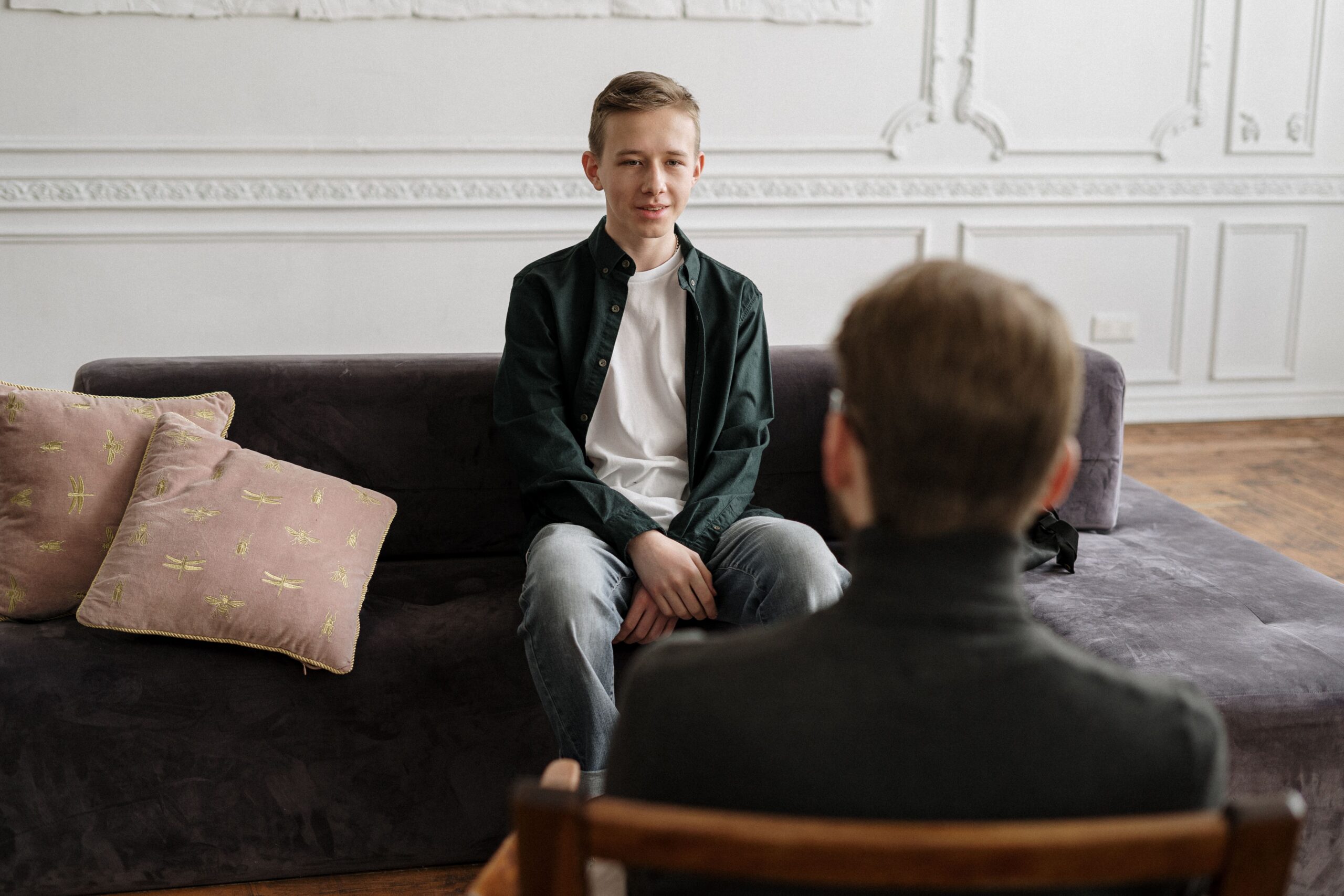
A teen therapist starts the work before your kid says a word. Early sessions are built around making it easy to be in the room: a low-pressure conversation about music, games, school, or nothing in particular, plus a few structured activities that give a quiet teenager something to do besides answer questions. Silence is common in the first visit or two, and a good therapist treats it as information.
If you’re looking for teen counseling in Jenison, MI, this is probably the question sitting underneath all the others. Your teen shrugs, says “fine,” and goes back to their room. You’re not sure therapy can work with a kid who won’t open up. It can, and here’s how.
The First Ten Minutes Look Nothing Like You Imagine
Most parents picture a therapist leaning forward with a notepad, asking a teenager how they feel. Most teenagers picture the same thing, which is why so many of them show up with their arms crossed.
A skilled therapist knows this and plans around it. The first session usually starts with everyday topics unrelated to the problem. What are they into? What does their week look like? Who do they actually like at school? Therapists learn a lot from the answer to “what are you playing right now?” The conversation is low stakes on purpose.
Some teens answer in full sentences within minutes. Others give one-word replies for the whole hour. Both are workable. We’ve had teens who said almost nothing in session one and then, by session three, brought up something they’d been carrying for a year.
What a Therapist Does Instead of Pushing for Answers
Direct questions about feelings tend to shut a guarded teenager down. So therapists reach for other tools. A few that tend to work with kids who stay quiet:
- Activities with the hands busy. Drawing, building something, sorting cards, playing a board game. Many teens talk more when they aren’t being looked at. Creative and expressive approaches lean on exactly this idea, and you can read more in our piece on creative expressive therapies for kids and teens.
- Scaling and choice questions. “On a scale of one to ten, how rough was this week?” is easier to answer than “How are you feeling?” A number feels safer than a confession.
- Naming what’s happening out loud. A therapist might say, “I get the sense that being here feels weird. That makes sense. We can take it slow.” Teens often relax when someone says the awkward part for them.
- Giving them control. Which chair to sit in, what to work on first, whether the door stays open. A teenager who feels forced will resist. A teenager who has a say often leans in.
- Comfortable silence. A good therapist can sit in a quiet moment without rushing to fill it. That patience tells your teen they aren’t being graded.
This is how trust actually gets built with someone who has already decided adults are going to lecture them.
Why Your Teen Might Be Quiet (and Why It Matters Clinically)
Silence comes in several kinds. A therapist is paying attention to which one they’re sitting with, because each points to different next steps.
Protective silence. Your teen doesn’t trust the room yet. They need proof that what they say won’t be repeated to you word for word. This is the most common kind, and it eases once confidentiality is explained clearly and then respected.
Overwhelmed silence. Your teen has so much going on that they don’t know where to begin. Anxiety and depression can both look like this. Asking “what’s wrong?” feels impossible to answer, so they don’t try.
Flat or shut-down silence. The kid seems drained, disinterested, or far away. A therapist will gently look at sleep, appetite, energy, and mood to see whether something like depression is part of the picture. If you’re seeing that kind of withdrawal at home, our article on 3 ways teens can benefit from therapy lays out what support can change.
Defiant silence. Your teen was brought here, they didn’t choose it, and saying nothing is the one form of control they have. The fix is usually to hand some control back.
Reading which one is in play shapes everything that follows, and it’s a big part of what an experienced teen therapist brings.
What Happens to Your Role as the Parent
You’ll likely be part of the first session, at least briefly, so the therapist can hear your concerns and explain how things work. After that, many sessions are one-on-one with your teen, because teenagers speak more freely without a parent in the room.
That raises a fair worry: will you be left in the dark? Not entirely. A therapist keeps your teen’s private thoughts private (that trust is what makes the work possible) while keeping you informed on the bigger picture, like how things are going overall and what to try at home. The one exception is safety. If your teen is at risk of hurting themselves or someone else, a therapist will involve you.
Sometimes the best move is bringing the family into the work later. We see this often when a teen’s silence is tangled up with communication patterns at home. If that sounds familiar, you may find our post on reasons to try family therapy with your teenager useful.
What Progress Looks Like With a Quiet Teen
It usually looks small and easy to miss.
- Your teen stops dreading the appointment, or even mentions it without being asked.
- They start offering one extra sentence in session, then a story.
- You notice a shift at home: a little more patience, a little less door-slamming, a stray comment at dinner.
- They begin using a coping skill, like a breathing technique or a way to step away from an argument, without being reminded.
Some teens open up within a few sessions. Others take longer, especially if they’ve been hurt or let down before. Pace depends on your teen’s own timing, and a good therapist won’t promise a timeline they can’t keep. What we can say is that a quiet teenager can still open up. Most of the teens who start out silent end up talking, often more than their parents expected.
When It’s Time to Make the Call
You can reach out well before your teen is in crisis. Consider booking if you’ve noticed:
- Pulling away from friends or things they used to enjoy
- A drop in grades or motivation that doesn’t seem like laziness
- Changes in sleep or eating
- Irritability or anger that seems bigger than the situation
- Comments that sound hopeless, or any talk of self-harm (in that case, don’t wait)
If your teen talks about suicide or is in immediate danger, call or text the 988 Suicide & Crisis Lifeline or call 911.
If your teen has gone quiet and your gut says something is off, trust it. Parents are usually right.
At Great Lakes Wellness Counseling, our counselors work with kids and teens every week, including the ones who give us nothing but a shrug in the first session. We do our best to respond quickly, and we’ll help you find a therapist your teenager has a real shot at connecting with. We’re in-network with several insurance plans, including Blue Cross Blue Shield, Priority Health, and Aetna, and we also see teens online anywhere in Michigan. If you’re looking for teen counseling in Jenison, MI, schedule an appointment and tell us a little about your kid. You don’t have to have the words figured out. That’s our job.